
Enhance Hydration, Rep Volume, and Endurance with Signature Electrolytes
BBCOM Editors
January 10, 2025
What Are Electrolytes?
Electrolytes are essential minerals that underpin core physiological processes—including fluid balance regulation, nerve signal transmission, and muscle contraction. The primary electrolytes include sodium, potassium, calcium, magnesium, chloride, and phosphate:
Sodium: Governs fluid balance, blood pressure, and nerve function.
Potassium: Critical for muscle contraction, nerve signaling, and cardiac health.
Calcium: Vital for bone integrity and muscle activation.
Magnesium: Supports enzymatic reactions and energy production.
Chloride: Maintains fluid homeostasis.
Phosphate: Contributes to energy metabolism and bone health.
Why Supplement Electrolytes?
Hydration is not merely about water intake—it requires electrolyte balance. Daily processes (respiration, perspiration, elimination) cause concurrent losses of water and electrolytes. Electrolyte supplementation is clinically proven to:
Mitigate dehydration and exercise-induced muscle cramping.¹
Alleviate cardiovascular and thermal strain during aerobic activity.²
During resistance training, muscles depend on electrolytes to initiate, execute, and relax contractions. Suboptimal levels compromise strength, endurance, and overall performance.
Why Take Signature Electrolytes?
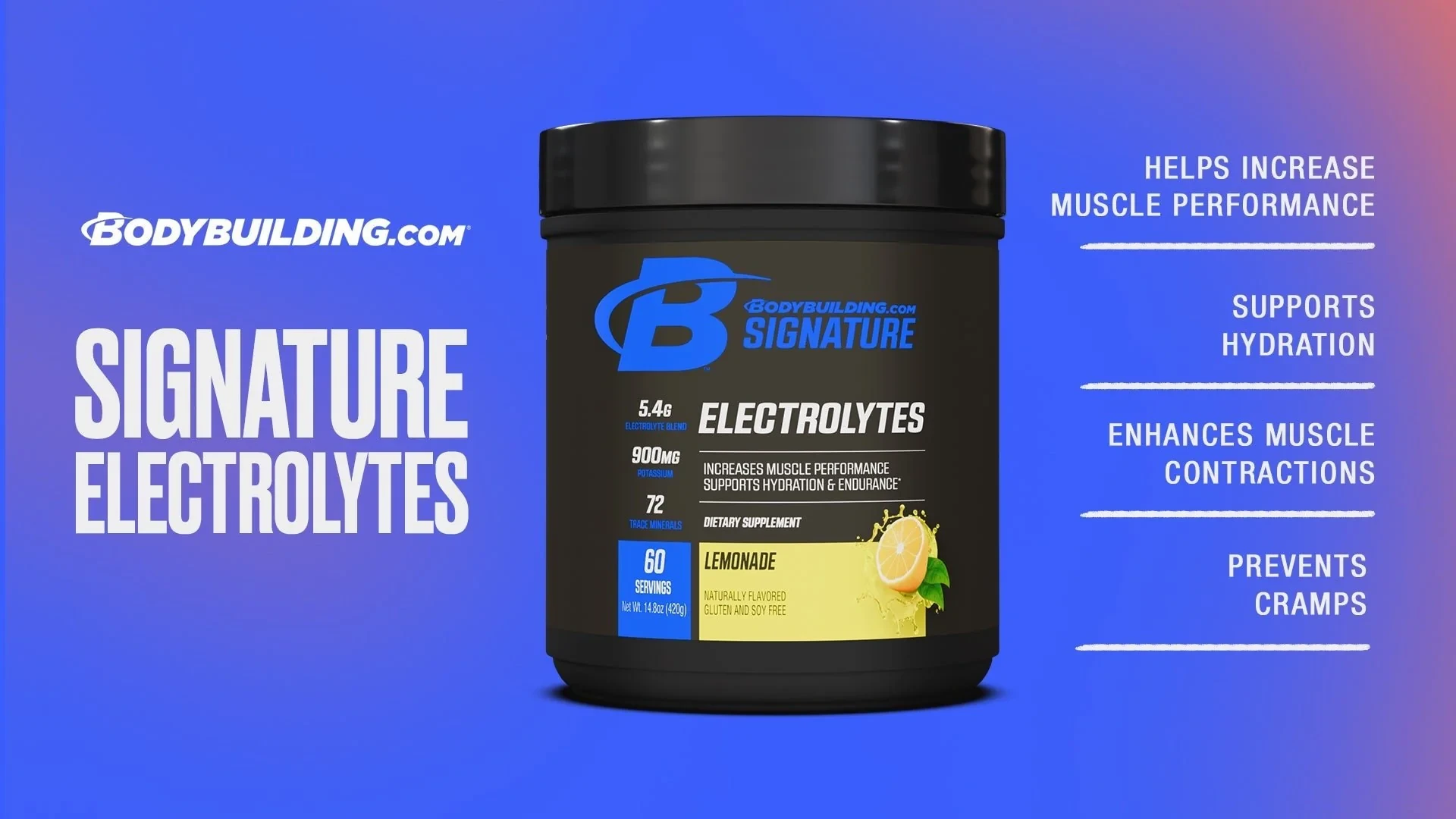
Bodybuilding.com’s Signature Electrolytes features a scientifically balanced blend of sodium, potassium, magnesium, and calcium to support peak muscular performance, contraction efficiency, and hydration. Each serving delivers:
5.4 grams of total electrolytes
900 mg potassium
680 mg sodium
100 mg calcium
50 mg magnesium
This ratio is optimized to maintain hydration pre-, intra-, and post-workout—driving superior results in and out of the gym.
Ingredient Highlights
Sodium
Sodium is indispensable for fluid balance, blood volume regulation, and nerve impulse transmission. In resistance training, it enables muscles to retain hydration and contract with maximal force—enhancing endurance and power output.
Signature Electrolytes’ 680 mg of sodium is sourced from four bioavailable forms, each with unique benefits:
Sodium Chloride
Replenishes the electrolyte most rapidly lost in sweat. Prevents dehydration, sustains blood volume, and supports nerve/muscle function.
Sodium Phosphate Dihydrate
Buffers lactic acid accumulation, reducing muscle acidity and delaying fatigue—ideal for high-rep or endurance-focused lifting.
Himalayan Pink Salt
Contains over 80 trace minerals (e.g., iron, magnesium, calcium) that support oxygen transport, muscle contraction, and antioxidant activity.
Sea Salt
Naturally sourced with trace minerals (zinc, iodine) to bolster immune function and metabolic health. Facilitates steady electrolyte replenishment.
Potassium
Potassium synergizes with sodium to maintain cellular hydration, prevent cramping, and sustain muscle endurance. A balanced sodium-potassium ratio is non-negotiable for smooth, powerful contractions—critical for weightlifting performance.
Our formula uses potassium citrate (900 mg per serving), a highly bioavailable form that:
Regulates acid-base balance for prolonged high-intensity training.
Neutralizes lactic acid via its alkalizing properties, enhancing endurance.
Magnesium
Magnesium buffers lactic acid, reduces muscle acidity, and delays fatigue—enabling longer, more intense workouts. Low levels correlate with reduced endurance, cramping, and difficulty maintaining training volume.
Magnesium is involved in over 300 enzymatic reactions (including muscle function and energy production). Signature Electrolytes uses magnesium citrate (370 mg per serving), a highly absorbable form that:
Promotes post-contraction muscle relaxation to reduce cramping.
Supports ATP (energy) production for sustained workout performance.
Calcium
Calcium is not just for bones—it’s critical for muscle contractions. Our formula uses calcium lactate (800 mg per serving), a bioavailable form that:
Enables neuromuscular communication for synchronized contractions.
Triggers muscle activation by interacting with troponin and actin (key contraction proteins).
Insufficient calcium weakens contractions, compromising strength and stability during lifting.
Chloride
While not quantified in milligrams, chloride (as potassium chloride) is a key component of our blend. It collaborates with sodium to:
Maintain fluid balance.
Support nerve impulses.
Regulate pH to prevent exercise-induced acid buildup.
The Ideal Ratios: Why This Formula Works for Weightlifters
Signature Electrolytes is tailored explicitly for resistance trainers, with a ratio optimized to:
1. Preserve Muscle Hydration & Contraction Strength
The 680 mg of sodium and 900 mg of potassium work in tandem to:
Keep muscle cells hydrated.
Prevent cramping.
Maintain contractile efficiency—critical for heavy lifting.
2. Support Relaxation & Recovery
The 50 mg of magnesium and 100 mg of calcium:
Facilitate muscle relaxation post-lift to reduce spasms and tightness.
Ensure muscles can “reset” for subsequent sets or sessions.
Takeaways
Signature Electrolytes is uniquely formulated for heavy lifters and intense trainers—combining multi-source electrolytes with trace minerals from Himalayan pink salt and sea salt. Key benefits include:
Replenishes electrolytes lost via sweat.
Delivers trace minerals for beyond-basic hydration.
Maximizes bioavailability for muscle performance and recovery.
Whether you’re training for strength, endurance, or aesthetics, our premium electrolyte powder provides the minerals needed to:
Stay hydrated.
Perform at peak levels.
Recover faster.
Gain the edge to achieve your fitness goals.
References
Choi, D.-H., Cho, J.-Y., Koo, J.-H., & Kim, T.-K. (2021). Effects of Electrolyte Supplements on Body Water Homeostasis and Exercise Performance during Exhaustive Exercise. Applied Sciences, 11(19), 9093.
Shirreffs, S. M., & Sawka, M. N. (2011). Fluid and Electrolyte Needs for Training, Competition, and Recovery. Journal of Sports Sciences, 29(Suppl 1), S39–S46.
Enhance Hydration, Rep Volume, and Endurance with Signature Electrolytes
•
Author: Amber Nelson
•
nutrition
Share this article